
January 28th, 2026 - Zed van der Vyver
The Ultimate Guide to Doors in Thailand: Security, Style, and Humidity-Proofing
If you are building a home or upgrading your condo in Thailand, choosing a door is about more than just privacy. In the tropics, a door is a structural gatekeeper that has to survive intense humidity, relentless sun, and the occasional uninvited guest (including termites).
Think of your doors like the shoes for your house. You wouldn’t wear suede loafers into a flooded rice paddy, and you shouldn’t put a delicate indoor door on your front porch. Choosing the right "footwear" for your entryways ensures your home stays dry, secure, and looking sharp for years.
The Technical Breakdown: Understanding the "Moving Parts"
Before you get lost in the aisles of a hardware store, you need to understand what these doors are actually made of. In Thailand’s climate, the material is the most important variable.
Core Materials: The Muscle
-
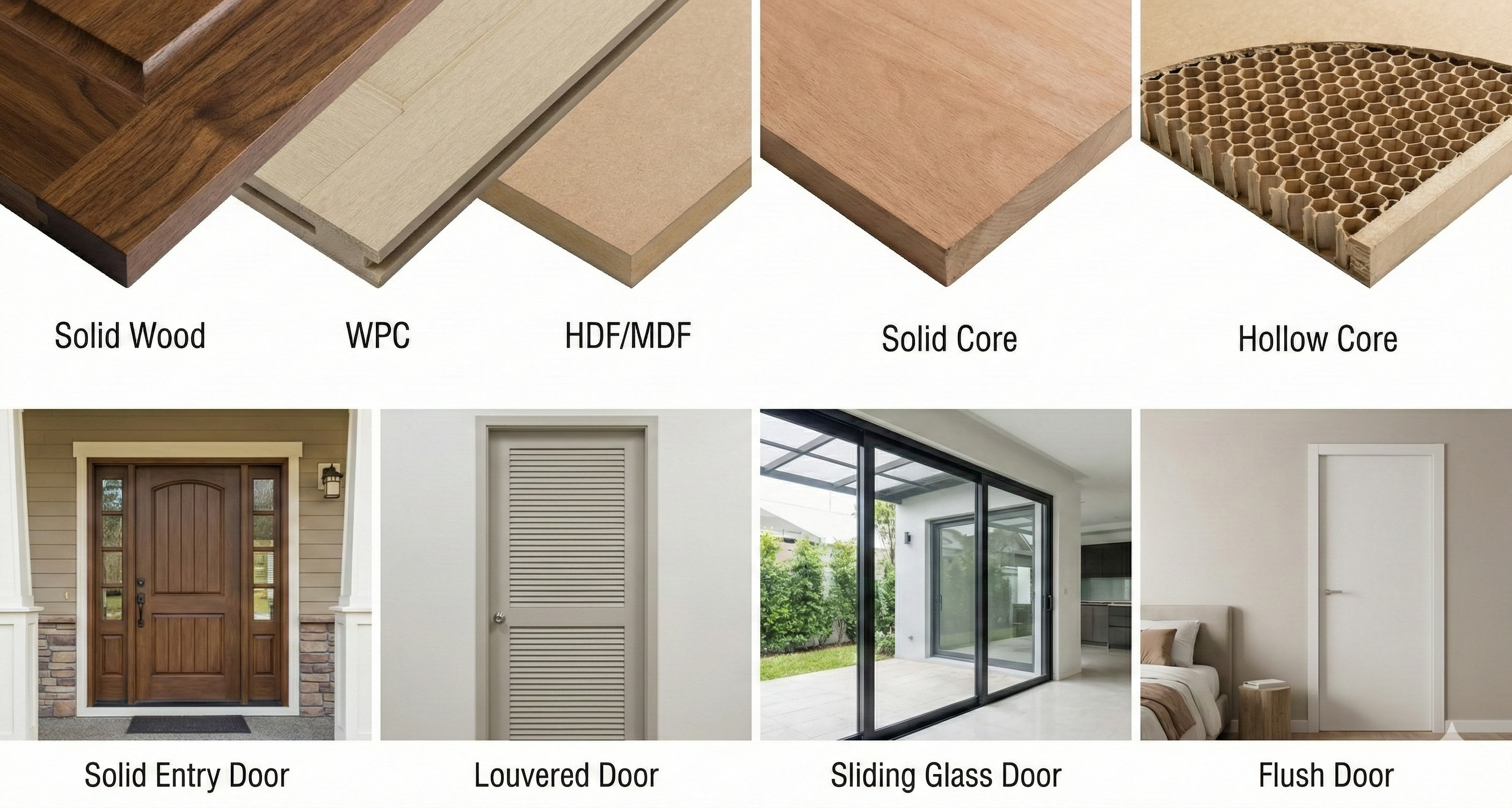
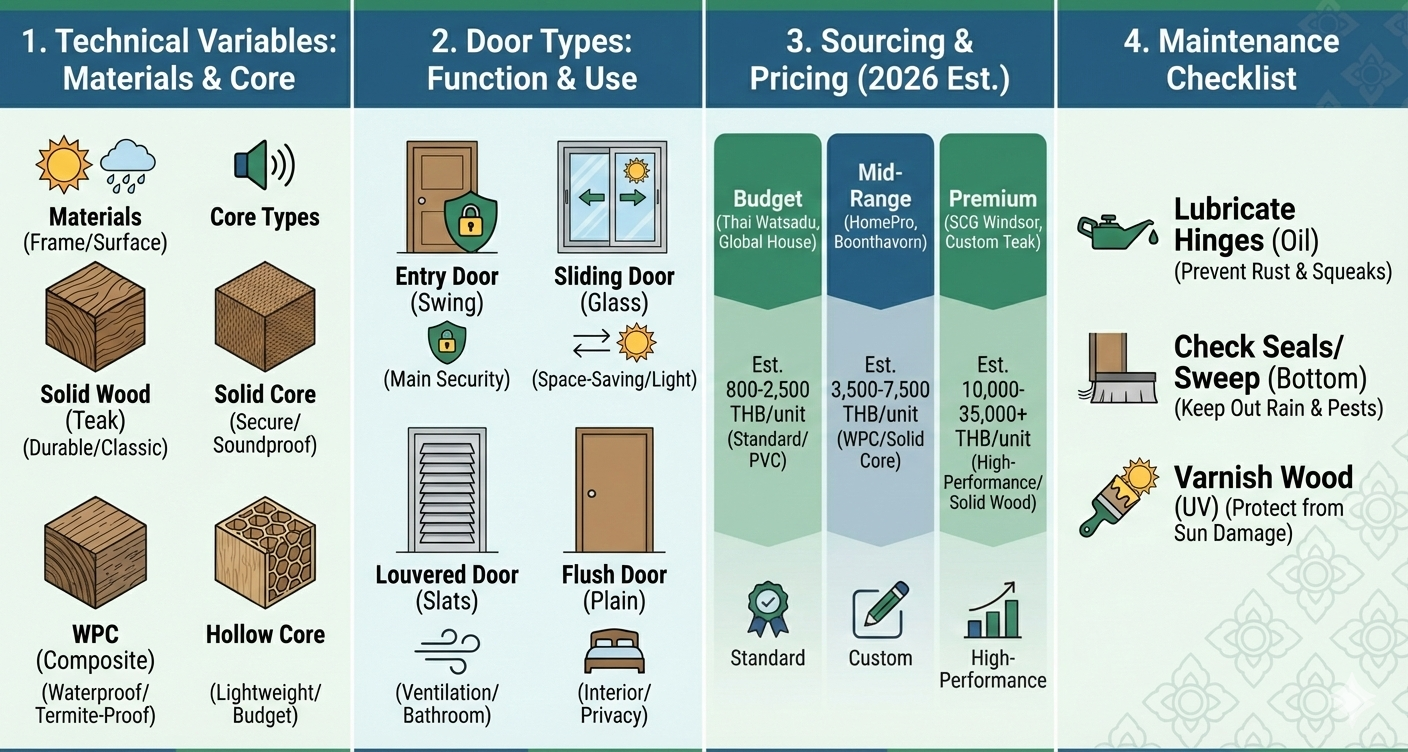
Solid Wood: The "Gold Standard." Usually Teak (Mai Sak) or Red Wood (Mai Daeng). Why it matters: It’s incredibly beautiful and heavy, but natural wood "breathes." It can swell during the monsoon and shrink in the hot season, sometimes making it hard to close.
-
WPC (Wood Plastic Composite): A hybrid of wood fiber and plastic. Why it matters: Think of this as the "Super Material" for Thailand. It looks like wood but is 100% waterproof and termite-proof. It’s perfect for bathrooms or exterior doors that get hit by rain.
-
UPVC/PVC: Lightweight, synthetic materials. Why it matters: PVC is the budget king for bathrooms, while uPVC is a heavy-duty version used for sliding glass doors. It won't rot, rust, or peel, but cheap PVC can become brittle if left in direct sunlight.
-
Steel/Safety Doors: Often used for back exits or high-security condos. Why it matters: These are the "bodyguards." They are fire-resistant and nearly impossible to kick in, though they can be heavy and industrial-looking.
The "Swing" and Hardware: The Joints
-
Hinges (Stainless Steel Grade 304): In Thailand’s humid air, cheap hinges will rust and squeak within a year. Always look for "Grade 304" or "316" stainless steel.
-
Digital Locks: Increasingly popular in Bangkok and Chiang Mai. Why it matters: These allow for keyless entry via fingerprint or code—perfect for avoiding the "lost key" panic during a tropical downpour.
Door Types: Which One Fits Your Room?
Choosing a door style depends on how much "traffic" the area gets and whether it needs to hold back water or heat.
| Door Type | Best Use Case | The "Why it Matters" Factor |
| Solid Entry Door | Main Entrance | Your first line of defense. It provides the best security and "curb appeal" for guests. |
| Sliding Glass | Patios & Balconies | Uses "large-format" glass to let in light. Essential for modern Thai homes to create an indoor-outdoor feel. |
| Flush Door | Bedrooms | Flat, simple, and lightweight. Usually made of a wooden frame with a plywood skin. Great for budget-friendly interior use. |
| Louvered Door | Laundry/Storage | Features slats for airflow. Crucial for rooms with washing machines to prevent mold and "musty" smells. |
| Folding (Bi-fold) | Small Bathrooms | Folds like an accordion. Saves massive amounts of space in tiny condo bathrooms. |
Sourcing & Market Data: Where to Buy in Thailand
Thailand has a massive range of suppliers, from local woodcarvers in the North to high-tech showrooms in the city.
Top Suppliers
-
Budget (Ready-to-Go): Thai Watsadu and Global House. These are the best for standard-sized PVC bathroom doors and basic bedroom flush doors. You can walk in and buy these off the shelf.
-
Mid-Range (Selection & Style): HomePro and Boonthavorn. They offer a wide variety of WPC doors and modern digital locks. They also provide reliable delivery and installation referrals.
-
Premium (Custom & Engineered): SCG (Windsor) for high-end uPVC systems, or local Teak Wood Mills (found often in Phrae or specialized shops in Bangkok's Pracha Narat area). These are for "forever homes" where quality is the only priority.
2026 Pricing Tiers (Estimated)
Prices reflect standard single-door sizes (approx. 80cm x 200cm).
| Quality Tier | Estimated Price (THB) | What You Get |
| Economy (PVC) | ฿1,200 – ฿2,500 | Basic bathroom door, waterproof, simple design. |
| Standard (WPC/HDF) | ฿3,500 – ฿6,500 | Durable interior door, termite-resistant, modern finishes. |
| Premium (Solid Wood/Steel) | ฿9,000 – ฿25,000+ | Luxury Teak or high-security steel, custom carvings, heavy weight. |
Pro Tip: Always check if the price includes the frame (Wong-Gob). Buying a door without a matching frame is like buying a car without the tires—it won't work until you buy the rest.
Maintenance: The "Layman's" Checklist
A door in Thailand has a tough life. Here is how to keep yours from "complaining":
-
Oil the Hinges: Use a silicone spray or WD-40 on the hinges twice a year. The salty air (near the coast) and high humidity can cause metal-on-metal friction very quickly.
-
The "Bottom Gap" Check: In the rainy season, ensure your exterior door has a "door sweep" (a rubber strip at the bottom). This keeps out "The Big Three": Rainwater, Dust, and Snakes.
-
Varnish for Wood: If you have a solid wood door, it needs a fresh coat of UV-resistant varnish every 2–3 years. The Thai sun will "bleach" the wood, making it brittle and prone to cracking.
Summary & Next Steps
For most Thai homes, WPC (Wood Plastic Composite) is the best "all-rounder" because it handles the humidity like a pro without the high price of Teak. If you are living in a high-rise condo, focusing on a Digital Lock for your existing door is often the best value-for-money upgrade you can make.