
January 28th, 2026 - Zed van der Vyver
The Ultimate Guide to Ceilings in Thailand: Beat the Heat from Above
If you’re living in Thailand, the sun isn't just hitting your roof—it’s trying to bake your living room. In a tropical climate, your ceiling is far more than just a place to hang a fan; it is the thermal barrier that determines whether your home feels like a breezy sanctuary or a pre-heated oven.
Think of your ceiling like a giant parasol for your head. Just as you wouldn’t walk through Bangkok at noon without some shade, your house needs a high-quality "hat" to keep the interior cool, dry, and free from unwanted guests (like geckos and dust).
1. The Technical Breakdown: Understanding the "Moving Parts"
A ceiling is a system, not just a flat board. To get it right, you need to choose the right "skeleton" and "skin."
The Skeleton: The Hanging Frame
-
Galvanized Steel (C-Line): The gold standard in Thailand. These metal rods won't rust in the humidity and are strong enough to support heavy chandeliers or ceiling fans.
-
T-Bar Grid: A visible metal grid where tiles simply "drop in." Why it matters: It’s the easiest to access if you need to fix wiring or pipes later, but it looks more "office-like" than residential.
The Skin: Board Materials
-
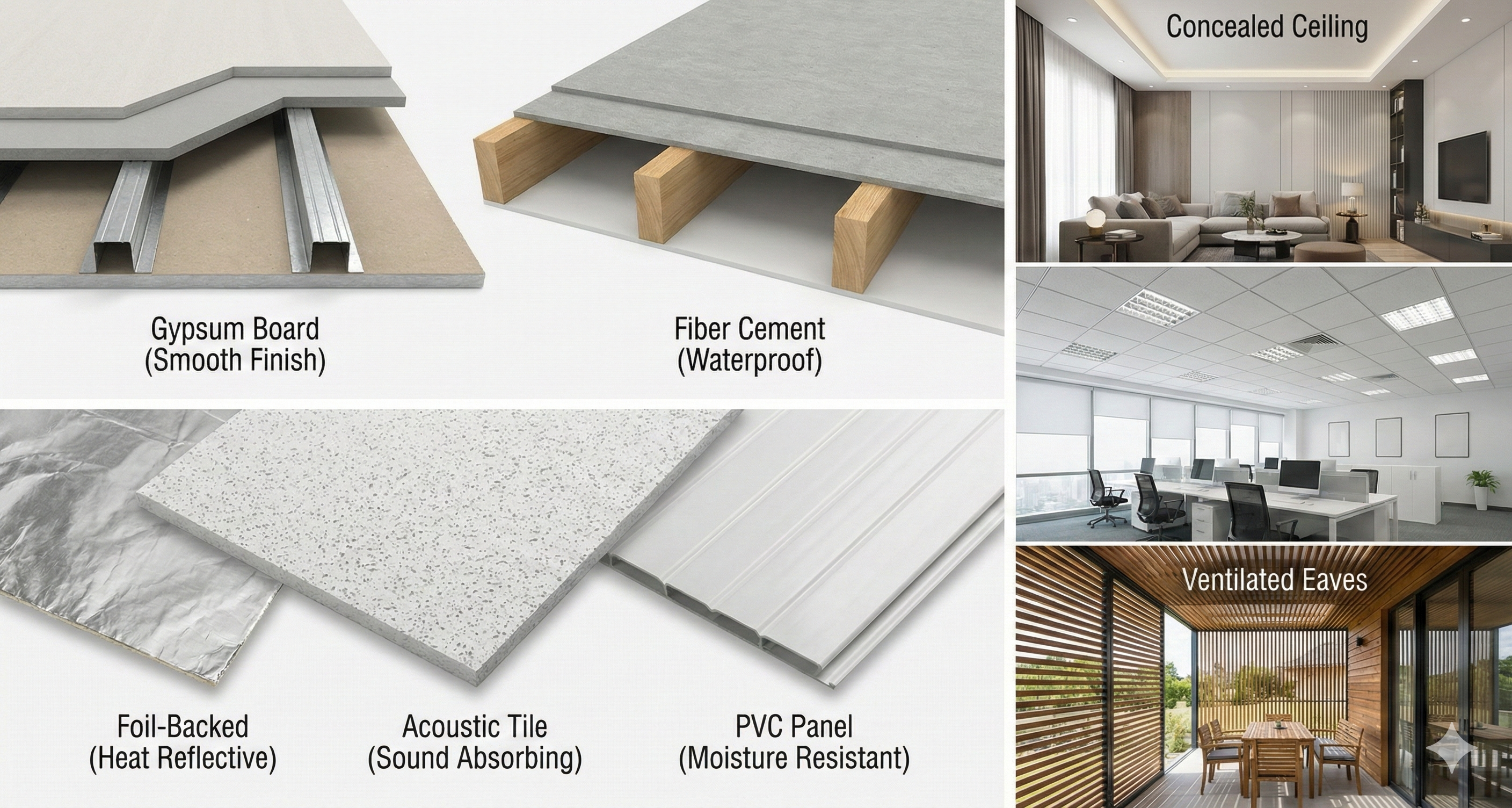
Gypsum Board: The most popular indoor choice. It’s smooth, seamless, and easy to paint.
-
Pro-Tip: Always look for "Heat-Shield" (Foil-backed) gypsum for top floors to reflect 95% of radiant heat.
-
-
Fiber Cement (Smartboard): A mix of cement and sand. It’s tougher than gypsum and waterproof.
-
Why it matters: Use this for bathrooms and outdoor eaves. It won't sag or rot when the monsoon rain blows in.
-
-
PVC Panels: Lightweight plastic "slats."
-
Why it matters: Zero maintenance and 100% waterproof. Great for a quick, cheap refresh in humid kitchens or laundry areas.
-
2. Ceiling Styles: Form vs. Function
Choosing a style depends on whether you want a "designer look" or "easy access."
| Ceiling Type | Best Use Case | The "Why it Matters" Factor |
| Concealed (Smooth) | Living Rooms / Bedrooms | No visible joints. It looks like one solid piece of art, making the room feel high-end and spacious. |
| T-Bar (Dropped) | Offices / Rentals | The tiles can be lifted out by hand. Perfect if you’re constantly changing AC ducts or internet cables. |
| Ventilated Eaves | Outdoor Overhangs | These have small holes or slots. They let the hot air trapped under your roof "breathe" out, lowering the house temp by 2–3°C. |
| Coffered / Step | Luxury Dining Areas | A "recessed" design that allows for hidden LED strip lighting (Cove lighting) for a soft, hotel-like glow. |
3. Sourcing & Market Data: Where to Buy in Thailand
You don’t need a specialist contractor for the materials; Thailand's "Big Box" retailers have everything in stock.
Top Suppliers
-
Budget & Bulk: Thai Watsadu and Global House. Ideal for buying standard 1.2m x 2.4m sheets and metal frames in large quantities.
-
Premium & Service: HomePro and Boonthavorn. They carry designer "3D" ceiling tiles and often have better warranties on their installation services.
-
Brand Names to Know: Look for Gyproc (Saint-Gobain) for gypsum, SCG (Elephant Brand) for fiber cement/Smartboard, and Shera for wood-look accents.
2026 Pricing Tiers (Estimated)
Prices include materials and basic labor per square meter (sqm).
| Quality Tier | Estimated Price (THB/sqm) | What You Get |
| Economy PVC/T-Bar | ฿250 – ฿450 | Basic white tiles, standard grid, DIY-friendly. |
| Standard Gypsum | ฿450 – ฿750 | Smooth finish, hidden frames, one coat of paint. |
| High-Performance | ฿900 – ฿1,500+ | Foil-backed boards, thick fiberglass insulation, step-design. |
The "Secret" Ingredient: Regardless of the board you choose, always budget for "Stay Cool" (Fiberglass Insulation) rolls to be laid on top of the ceiling. It’s the single best investment you can make to lower your monthly AC bill.
4. Maintenance: The "Layman's" Checklist
A ceiling is "out of sight, out of mind" until it starts dripping. Keep it healthy with these steps:
-
The "Yellow Spot" Scan: If you see a yellow or brown circle on your white ceiling, you have a roof leak or a leaky AC pipe. Fix the leak first, then paint over it. If the board feels soft or "mushy," it must be replaced to avoid mold.
-
Gecko Proofing: Ensure the gaps between your walls and your ceiling eaves are sealed with mesh. In Thailand, the "void" above your ceiling is a favorite highway for geckos and rodents.
-
Dust the Fans: Heavy ceiling fans can slightly vibrate the frame over time. Check once a year for fine cracks in the plaster where the fan meets the ceiling.
5. Summary & Next Steps
For a standard Thai home, the "winning" combo is Foil-backed Gypsum in the bedrooms and Ventilated Fiber Cement under the roof eaves. This setup keeps the heat out and allows the house to "exhale" the day's warmth.