
January 28th, 2026 - Zed van der Vyver
The Ultimate Guide to Tiles in Thailand: Choosing the Best Floors for Your Tropical Home
If you’re building or renovating in Thailand, your choice of flooring is more than just a style decision. It’s a battle against heat, heavy rain, and the inevitable "shoes-off" culture. Tiles aren’t just "hard carpet"—they are your home’s cooling system and its best defense against tropical humidity.
Think of your tiles like armor for your house. In a country where wood can warp in the damp and carpets trap heat like a wool sweater, tiles keep your home breathing and your feet cool.
The Technical Breakdown: Understanding the "Moving Parts"
Before you get lost in the endless aisles of a showroom, you need to understand what makes one tile different from another. It’s not just the pattern on top; it’s the "engine" underneath.
Material Composition: The Core
-
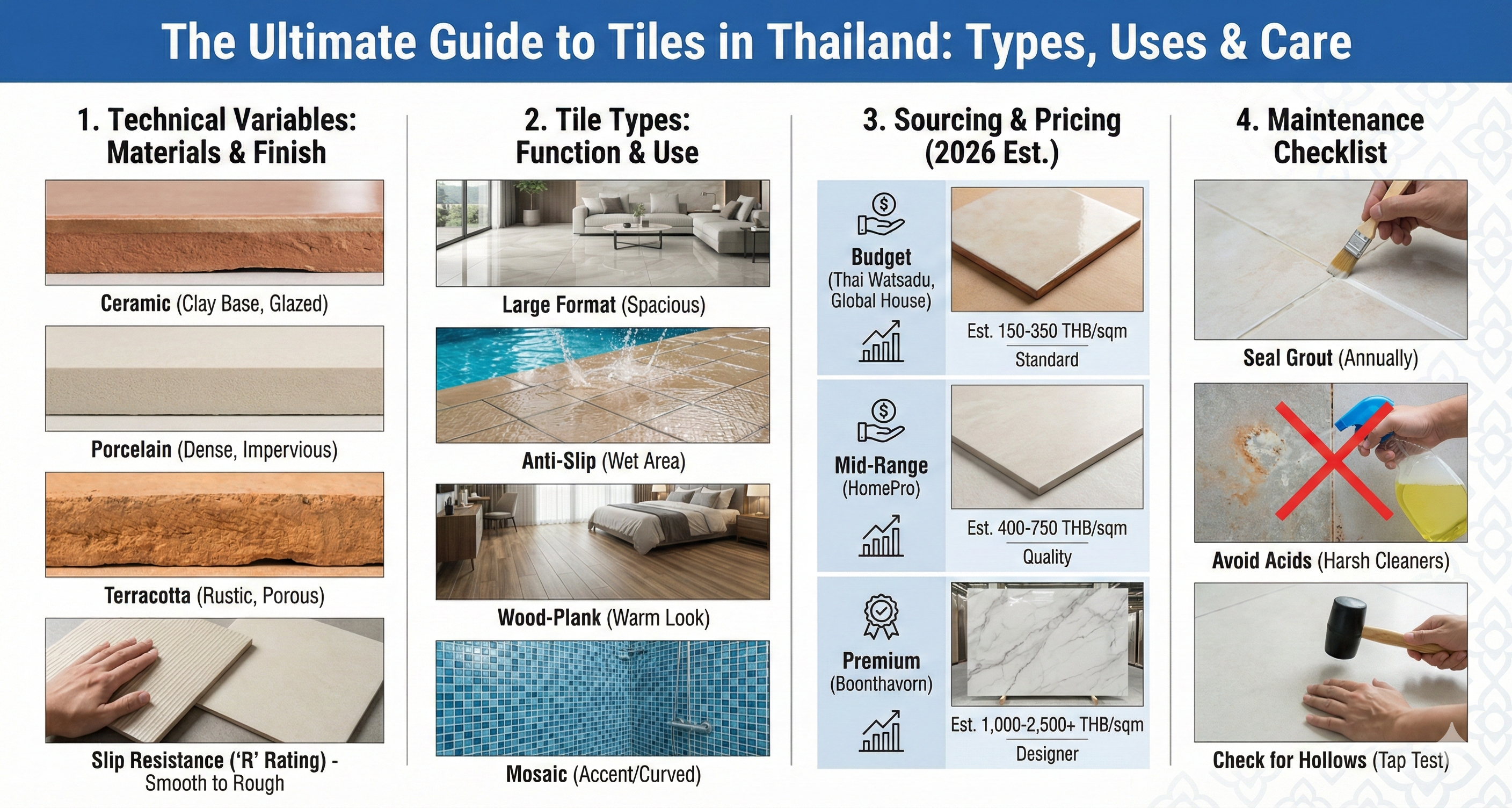
Ceramic: Made of red or white clay. It’s the "everyday" tile. Why it matters: It’s affordable and lightweight, making it great for walls, but it can chip more easily than harder materials.
-
Porcelain: A "super-ceramic" fired at much higher temperatures. Why it matters: It’s almost waterproof (impervious). If you have a high-traffic living room or a wet bathroom, porcelain is the gold standard for durability.
-
Granito (Homogeneous): A solid-color tile where the pattern goes all the way through. Why it matters: If you scratch a Granito tile, you won't see a different color underneath. It’s built like a tank for heavy-duty areas like garages.
Slip Resistance: The "R" Rating
In Thailand, floors get wet—from the rainy season or just mopping away the dust. Check the R-rating on the box:
-
R9: Smooth and easy to clean. Perfect for dry bedrooms or living rooms.
-
R10: Moderate grip. Best for kitchens and "dry" zones in bathrooms.
R11: Rough texture. Essential for outdoor patios, pool decks, and "wet" shower areas.
Tile Types: Which One Fits Your Life?
Choosing a tile is like picking a pair of shoes; you wouldn't wear high heels to a muddy field, and you shouldn't put polished ceramic on a rainy balcony.
| Tile Type | Best Use Case | The "Why it Matters" Factor |
| Large Format (60x60cm+) | Main Living Areas | Fewer "grout lines" (the cracks between tiles) mean less dirt to scrub and a room that feels much bigger. |
| Anti-Slip (R11) | Bathrooms & Patios | Prevents "ice-skating" accidents when the tropical rain blows onto your porch. |
| Wood-Plank Tiles | Bedrooms | You get the "warm" look of wood without the worry of termites or humidity warping the boards. |
| Mosaic Tiles | Showers & Pools | Small pieces on a mesh backing. They are great for curved surfaces and provide extra grip for your feet. |
| Terracotta | Rustic Gardens/Roofs | These "breathe" extremely well, keeping outdoor spaces naturally cool, but they need sealing to prevent stains. |
Sourcing & Market Data: Where to Buy in Thailand
You don’t have to go to a specialty boutique to find great tiles. Thailand has some of the best "Big Box" home stores in the world.
Top Suppliers
-
Budget (The DIY Route): Thai Watsadu and Global House. These are the "warehouses" of the tile world. Best for buying in bulk at the lowest prices. Great for standard sizes and "Grade B" deals for rental properties.
-
Mid-Range (Style & Service): HomePro. The most accessible option with branches in almost every mall. They have a great selection of "Tara" and "Cotto" brands and offer reliable delivery.
-
Premium (Custom & Design): Boonthavorn. This is the "Tile Mecca." If you want Italian imports, designer patterns, or a 3D preview of your room, go here. They also have the most knowledgeable staff.
2026 Pricing Tiers (Estimated)
Prices are per square meter (sqm) to help you budget for the whole room.
| Quality Tier | Estimated Price (THB/sqm) | What You Get |
| Economy Ceramic | ฿150 – ฿350 | Basic patterns, 30x30 or 40x40 sizes. Best for walls. |
| Standard Porcelain | ฿400 – ฿750 | High-quality 60x60 "Granito" look. Very durable. |
| Designer / Large Slab | ฿1,000 – ฿2,500+ | Marble looks, 60x120 sizes, and imported luxury styles. |
Pro Tip: Always buy 10% more than you need. Tiles are made in "batches," and if you run out, the next batch might have a slightly different color!
Maintenance: The "Layman's" Checklist
Tiles are low-maintenance, but they aren't "no-maintenance." In Thailand’s heat, things can get grimy fast.
-
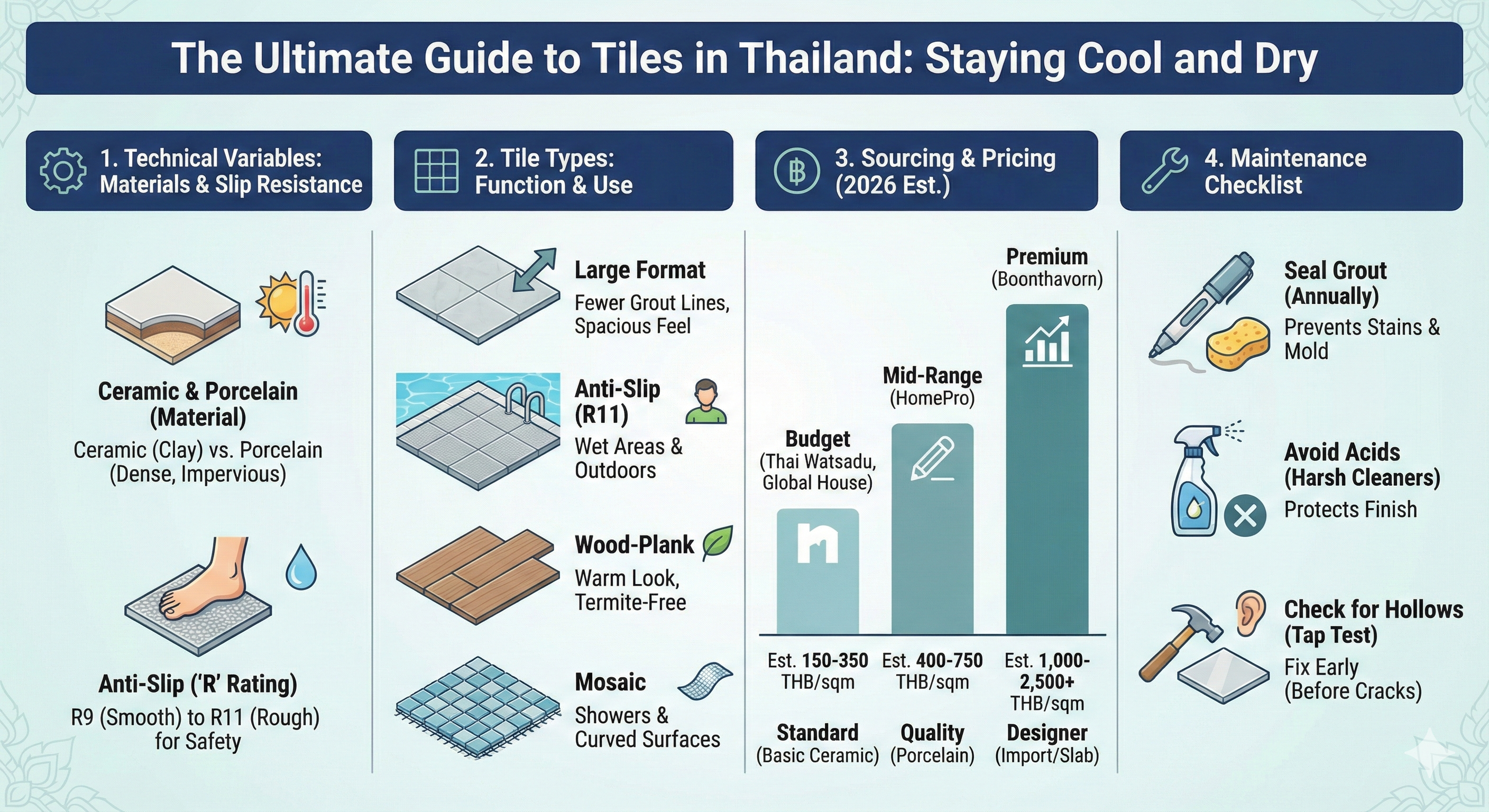
Seal Your Grout: The white lines between your tiles act like a sponge for dirt. Use a "Grout Sealer" (available at HomePro) once a year to keep them from turning black.
-
Avoid "Magic" Cleaners: Don't use heavy acids (like some toilet cleaners) on your floor tiles. They eat away at the shiny finish and the grout, making the floor more likely to stain later.
-
The "Hollow" Test: If a tile sounds like a drum when you tap it, it’s "hollow" underneath. This means the cement didn't stick. Fix these early before they crack or pop up during a heatwave!
Summary & Next Steps
Tiles are the silent heroes of a Thai home. If you want a house that stays cool and is easy to clean after a rainy day, prioritize Porcelain for your floors and R11 ratings for your wet areas.