
April 6th, 2026 - Zed van der Vyver
The Ultimate Guide to Foundations in Thailand: Building Your Home on Solid Ground
If you are building a house in Thailand, the foundation is the most important "hidden" part of your home. It’s the boots your house wears to stand in the mud. In a country known for its soft clay, tropical monsoons, and shifting soil, getting your foundation right is the difference between a dream home and a sinking nightmare.
Think of your foundation like the roots of a tree. If the roots are shallow in soft soil, the tree will topple when the wind blows or the ground gets soaked. In Thailand, where the ground can be as soft as toothpaste in some areas and as hard as rock in others, you need the right "roots" for your specific location.
The Technical Breakdown: Understanding the "Moving Parts"
Before the concrete trucks arrive, you need to understand what is happening beneath the surface. The type of foundation you choose depends entirely on the Soil Profile of your land.
The Soil Variable: Where are you building?
-
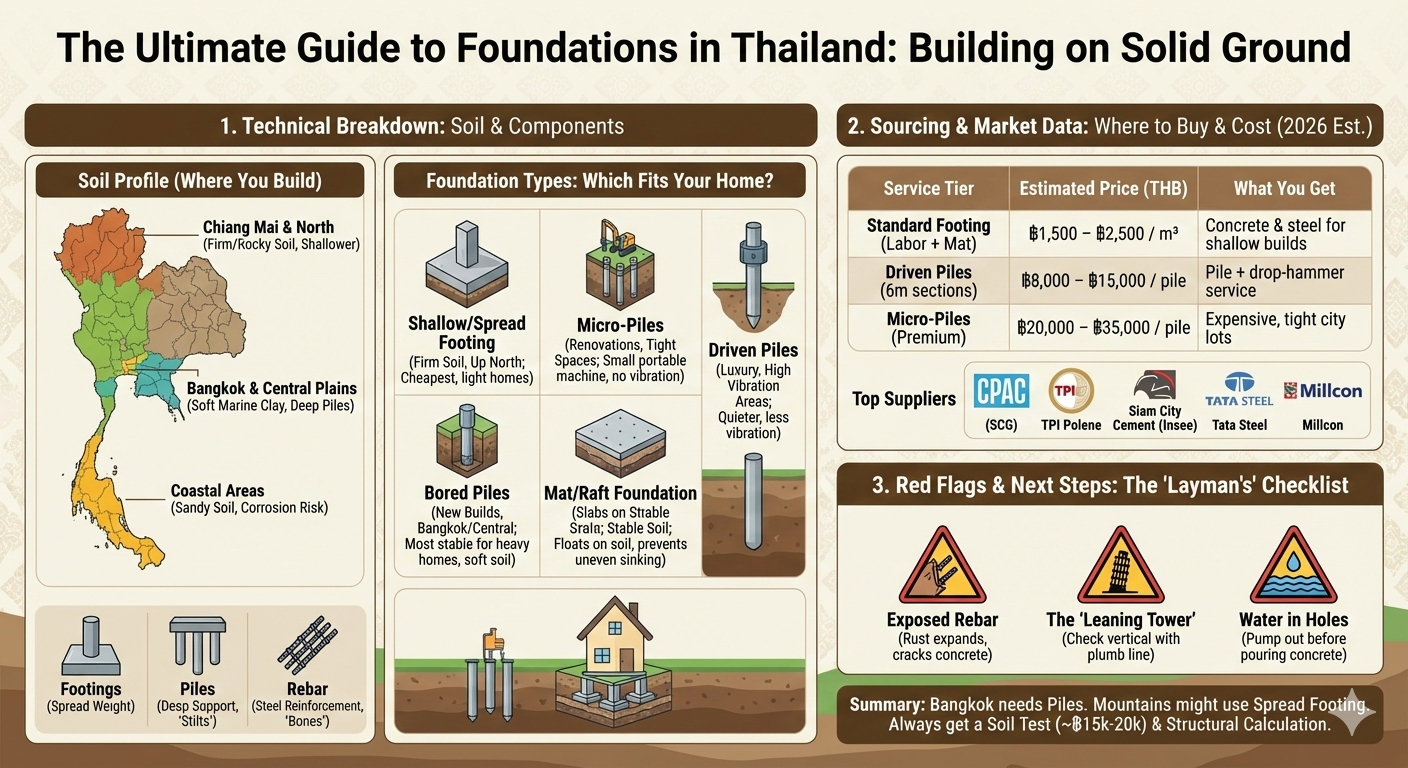
Bangkok and Central Plains: This area is mostly "soft marine clay." It’s deep, wet, and squishy. Houses here almost always require deep piles to reach the hard sand layer deep underground.
-
Chiang Mai and Northern Regions: The ground here is often firmer, consisting of mountain soil and rock. You might get away with shallower foundations here.
-
Coastal Areas (Phuket/Samui): Sandy soil drains well but can shift easily. Saltwater can also corrode the steel inside your concrete if it isn't protected.
Foundation Components: The Skeleton
-
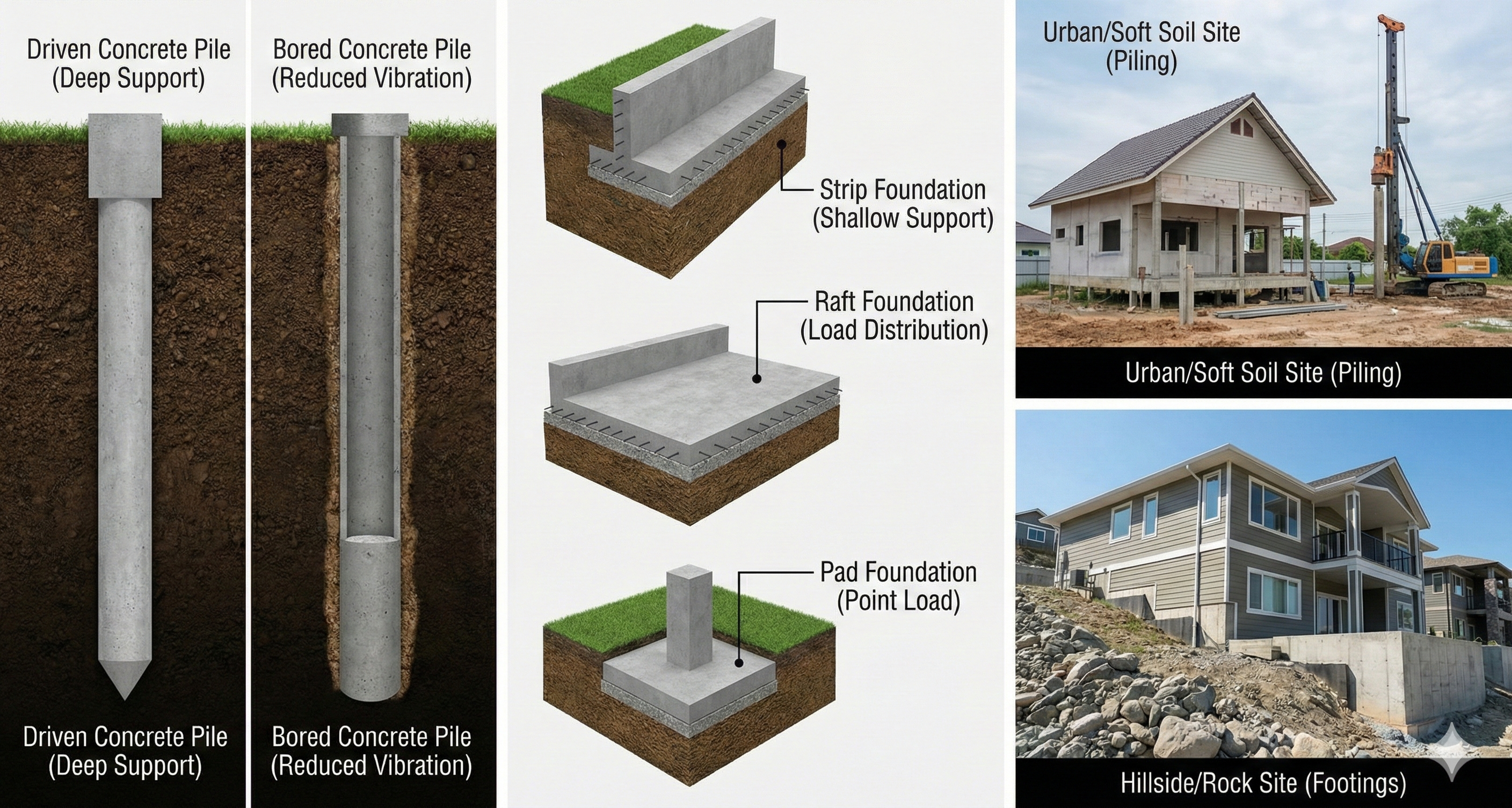
Footings: These are wide concrete "feet" that sit at the bottom of a hole. They spread the weight of the house over a larger area.
-
Piles (The Stilts): These are long poles of concrete driven deep into the earth. Why it matters: They bypass the "mushy" topsoil to lean on the hard ground far below.
-
Rebar (Steel Reinforcement): Think of this as the "bones" inside the concrete "flesh." Without steel, concrete would crack and snap under the weight of the house.
Foundation Types: Which One Does Your House Need?
Choosing a foundation is like choosing the right tires for a car—you wouldn't put racing slicks on a mud truck.
| Foundation Type | Best Use Case | The "Why it Matters" Factor |
| Shallow/Spread Footing | Firm, rocky soil (Up North) | Cheapest option. It sits just a few meters deep. Great for light, one-story homes on hard ground. |
| Micro-Piles | Renovations & Tight Spaces | These are small-diameter poles driven by a portable machine. Perfect if you’re adding a kitchen extension and don't want to crack your neighbor's walls. |
| Driven Piles (Spun Piles) | New Builds in Bangkok/Central | Huge concrete poles hammered into the ground. They provide the most stability for heavy, multi-story homes in soft soil. |
| Bored Piles | Luxury Homes / High Vibrations | A hole is drilled first, then filled with concrete. It’s quieter and vibrates less than hammering piles, which keeps the neighbors happy. |
| Mat/Raft Foundation | Slabs on Stable Soil | A thick "raft" of concrete that the whole house sits on. It floats on the soil. Good for preventing uneven sinking in medium-firm ground. |
Sourcing & Market Data: Where to Buy in Thailand
Foundations aren't something you buy off a shelf at a mall; they are a mix of raw materials and heavy machinery services.
Top Suppliers
-
The "Big Three" Cement: CPAC (SCG), TPI Polene, and Siam City Cement (Insee). These companies provide the "Ready-Mix" concrete trucks you see on the road. They are the gold standard for strength and consistency.
-
Piling Specialists: For piles, look for companies like Bored Pile Co. or local contractors certified by SCG.
-
Steel Reinforcement: Tata Steel Thailand or Millcon. Ensure your contractor buys "SD40" grade steel for structural footings—it's the industry standard for safety.
2026 Pricing Tiers (Estimated)
Note: Prices vary by the depth of the "hard layer" in your specific province.
| Service Tier | Estimated Price (THB) | What You Get |
| Standard Footing (Labor + Mat) | ฿1,500 – ฿2,500 per m³ | Just the concrete and steel for shallow builds. |
| Driven Piles (6-meter sections) | ฿8,000 – ฿15,000 per pile | Includes the pile and the "drop-hammer" machine service. |
| Micro-Piles (Premium) | ฿20,000 – ฿35,000 per pile | Expensive, but essential for tight city lots where big trucks can't fit. |
Pro Tip: Never skip a Soil Test. For about ฿15,000 – ฿20,000, a professional lab will drill a hole and tell you exactly how deep your piles need to go. This can save you hundreds of thousands in "over-building" or future repairs.
Red Flags: The "Layman's" Warning Signs
You don't need an engineering degree to spot a bad foundation job. Watch out for these three things:
-
Exposed Rebar: If you see rusty steel sticking out of the concrete and getting rained on, it’s a problem. Rust expands and will eventually crack the concrete from the inside out.
-
The "Leaning Tower": If your contractor doesn't use a "Plumb Line" (a string with a weight) to ensure the piles are perfectly vertical, the weight of your house won't be distributed correctly.
-
Water in the Holes: If they pour concrete into a footing hole filled with muddy water, the concrete will be weak. They must pump the water out first!
Summary & Next Steps
Building in Thailand starts from the bottom up. If you are in Bangkok, assume you need piles. If you are in the mountains, a spread footing might suffice. Always ask your architect for a "Structural Calculation" before you start digging.